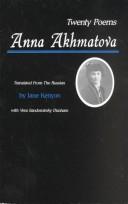
Anna Akhmatova
Anna Andreyevna Gorenko was born at Bolshoy Fontan, near the Black Sea port of Odessa, and moved with her family to Tsarskoye Selo, near St. Petersburg when she was eleven months old. Her parents were both descended from Russian nobility. From age 7 to 13 she and her family spent their summers in a dacha near Sevastopol. She started writing poetry at the age of 11, and was first published at age 17. Her father did not want poetry published under his name, so she adopted her grandmother's surname "Akhmatova" and published under the name Anna Akhmatova.
In 1905 her parents separated, and in 1906 she moved to Kiev. In 1910, she married another poet, Nikolay Gumilev and began attending Kiev University to study law. After one year, she then moved to St Petersburg to study literature. She became known in literary circles in St Petersburg's and gave regular public readings of her work. In 1910, she co-founded the influential Guild of Poets, which went on to develop the Acmeist anti-symbolist school of poetry.
In 1912, she published her first book, *Evening*, with the Guild of Poets. She also gave birth to a son, Lev.
In 1918, at the height of her fame, she ended her difficult marriage to Nikolay Gumilev and went on to marry another poet, Vladimir Shilejko. She shortly began having affairs again. In 1921 her first husband was executed for his alleged role in a monarchist anti-Bolshevik conspiracy. His execution, along with those of 61 others of Russia's intelligentsia, led to the break-up of the Acmeist poetry group.
Akhmatova and her son Lev were criticized by the Marxist state as representing a "bourgeois aesthetic", and in 1925 her work was unofficially banned. She continued to write (but not to publish) poetry while working as a translator and critic. Because of his parentage, her son Lev was denied admission to academic institutions and was imprisoned several times on accusations of counter-revolutionary activity. She queued for hours to deliver him food packages and plead on his behalf.
Akhmatova married Nikolai Punin, and stayed with him until 1935. He was also repeatedly imprisoned and in 1953 he died in the Gulag. Stalin approved the publication of one volume of her poetry, but it was withdrawn and pulped after only a few months. During this time, the government kept her under surveillance, going so far as to place recording devices in her flat, and produced 900 pages of reports on her. Despite this suppression, her work continued was secretly circulated in the gulags.
During World War II, Akhmatova read to soldiers in military hospitals and on the front line. She witnessed the 900 day Siege of Leningrad, and in 1940, she began to write "Poem without a Hero", which she considered to be her major work. In 1946 she received a visit from the liberal, western, Jewish philosopher Isaiah Berlin in 1946, and was accusing by the government of poisoning the minds of Soviet youth. Surveillance of her was increased and she was expelled from the Union of Soviet Writers.
In 1949 Akhmatova's son Lev was sentenced to 10 years in a Siberian prison camp. She spent several years trying to get him released, and she began to publish overtly propagandist poetry praising Stalin and his regime, although she did not consider this work, which may have saved both her life and her son's, as part of her official corpus. In 1951 she was readmitted to Union of Writers. In 1956 her son Lev was released from the prison camp, and her poetry began to be published again. Several books of her collected poetry were published in the following years.
In 1962 she was visited by Robert Frost and in her dacha in Komarovo she met with young Russian poets. In the 1960s she had become more popular in the than she had been before the revolution. Even the government came to recognize her as one of the major poets of the Silver Age, and she was permitted to travel. She visited Sicily and England, meeting with some pre-revolutionary friends and receiving the Taromina Prize. She died shortly after returning to Russia. Thousands attended the two memorial ceremonies which were held in Moscow and in Leningrad. After being displayed in an open coffin, she was interred at Komarovo Cemetery in St Petersburg.
Akhmatova's poem *Requiem*, which documented her experiences during the 1930s when she lived in poverty and her son and husband were repeatedly arrested, was finally published within USSR in 1987.
Books
OpenLibrary works by this author.
Sobranie sochineniĭ. V 6 t
My Half Century
V to vremi͡a︡ i͡a︡ gostila na zemle
Selected Poems. (Review Copy)
Sochinenii︠a︡ v dvukh tomakh
Taĭny remesla
You will hear thunder
Way of all the Earth
Stikhotverenii︠a︡ i poemy
Poems of Akhmatova
U samogo mori͡a =
Rekviem, 1935-1940
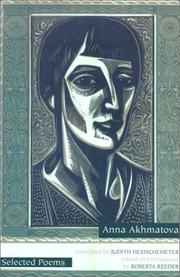
Selected Poems
Anna Akhmatova
Beg vremeni
Sochinenii︠a︡
Rekviem
Stikhotvorenii︠a︡
Izbrannye stikhotvoreniia
Poems
Forty-seven love poems
Belai︠a︡ stai︠a︡
Anno Domini MCMXXI
Podorozhnik
Chetki
Akhmatova
Alʹmanakh muz
Anna Akhmatova
Anna Akhmatova
Anna Akhmatova o Pushkine
Anna Akhmatova v Tverskom krai͡u︡
Anno Domini
A poem without a hero
A poem without a hero [by] Anna Akhmatova
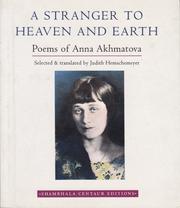
A Stranger to Heaven and Earth
At the Very Edge of the Sea
Belaia staia
Bílé hejno
Chetki
Dvenadtsat' stikhotvoreniǐ iz Podorozhnika
Dykhanie pesni
Evening
Evening (Poems 1912)
Fear and the Muse
Frozen 2
Gedichte
Golgofa XX veka
Golosa poe tov
Golosa poėtov
I͡A-golos vash--
Intimations
I︠U︡nostʹ
Izbrana|i|a lirika
Izbrannoe
Izbrannye stikhotvoreniya
Iz shesti knig
Klassicheskai͡a︡ poėzii͡a︡ Vostoka
Koreǐskaia klassicheskaia poeziia
Lit︠s︡a
Mój Puszkin
Music
Ne tainy i ne pechali..
Night with Connected Readings
O Pushkine
Ot t͡s︡arskoselʹskikh lip
Pamyati Anny Akhmatovoi
Piat'desiat stikhotvoreniǐ
Pis'ma
Pobeda nad Sudʹboĭ
Poema bez geroi︢a
Poėma bez geroi͡a︡
Poėma bez geroı︠a︡
Poème sans héros, Requiem et autres œuvres
Poem ohne Held
Poem without a Hero and Selected Poems
Poezje wybrane
Poezje wybrane
Prentice Hall Literature--Timeless Voices, Timeless Themes--Platinum
Prentice Hall Literature - Timeless Voices, Timeless Themes - The British Tradition
Prentice Hall Literature--Timeless Voices, Timeless Themes--World Literature
Primite ėtot dar--
Putem vsei︠a︡ zemli
Putëm vseya zemli
Reekviem
Reekviem
Requiem
Requiem Edition Bilingue
Requiem et autres poèmes
Selected early love lyrics
Selected poems [by] Anna Akhmatovä
Selected Poems (of) Anna Akhmatova
Selected Poems of Anna Akhmatova
Serebri͡a︡nai͡a︡ iva
Seroglazyĭ korolʹ
Severnye ėlegii
Shirim liriyim, Reḳviʾem
Sinii vecher
Siniĭ vecher
Sobranie sochineniĭ v shesti tomakh
Sochineni|i|a / Anna Akhmatova
Sochineniya
Sochineniya v dvukh tomakh
Stikhi i proza
Stikhi, perepiska, vospominaniya, ikonografiya
Stikhotvoreniia [1909-1957
Stikhotvoreniia, 1909-1960
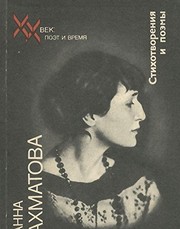
Stikhotvoreniia i poemy
Stikhotvorenii︠a︡ i poemy
Stikhotvorenii͡a i poėmy
Stikhotvoreniya i poemy
Stikhov moikh belai︠a︡ stai︠ā
Stixi Perepiska Vaspaminaniya Ikanagrafiya
Tainy remesla
Teksty
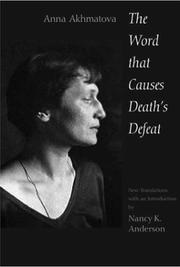
The word that causes death's defeat
Twenty poems
U Samago Moria
Uznai͡u︡t golos moĭ--
Vecher
Vecher ̀
Vremia prishlo
V to vremi︠a︡ i︠a︡ gostila na zemle--"
"V to vremya ya gostila na zemle --"
White flock
Zapisnye knizhki Anny Akhmatovoĭ (1958-1966)
Серебряный век
Fetched from OpenLibrary. Some translations may appear as separate works.