Augustus Muir
Augustus Muir (full name Charles Augustus Carlow Muir [1892-1982]) graduated from the University of Edinburgh and followed a career in letters, working as a novelist, historian, biographer, journalist, and editor. Following World War I, he became the editor of the *World* newspaper. He wrote a biography of Charles White, the anecdotal *Scotland's Road of Romance: Travels in the Footsteps of Prince Charlie* (1934), and several histories of industrial firms. In 1953, he edited *How to Choose and Enjoy Wine*. Muir had a brief try at screen-writing and was the coauthor with Joseph Krumgold of *The Phantom Submarine* (1940), which starred Bruce Bennett and Anita Louise.
He had a burst of popularity in the 1920s and 1930s (his entire mystery-writing career spanned only 1925-1940, with fifteen books published). Virtually all of Muir's mystery thrillers were set in Scotland. He also wrote two thrillers under the pseudonym Austin Moore: *Birds of the Night* (1930) and *The House of Lies* (1932), both of which were reissued as by Augustus Muir.
[From *The Black Lizard Big Book of Locked-Room Mysteries*, by Otto Penzler (2014)]
Books
OpenLibrary works by this author.
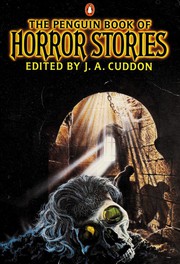
The Penguin Book of Horror Stories
Andersons of Islington
A Victorian shipowner
Blyth, Greene, Jourdain & Company Limited, 1810-1960
Churchill and Sim, 1813-1963
Heather-track & high road
How to choose and enjoy wine
In Blackburne valley
John White
Literature and wine
Raphael, M. D
Satyr mask
Scotland's road of romance
Scotland's road to romance
Scottish portrait
The black pavilion
The Blue bonnet
The bronze door
The Fife Coal Company Limited
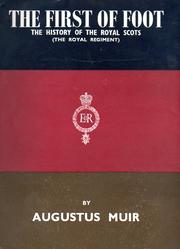
The First of Foot
The green lantern
The history of Baker Perkins
The intimate thoughts of John Baxter, bookseller
The Kenyon tradition
The man who stole the crown jewels
The riddle of Garth
The Shadow on the Left
The silent partner
The silent partner
The story of Jesus
The story of Shotts
The third warning
The vintner of Nazareth
Fetched from OpenLibrary. Some translations may appear as separate works.