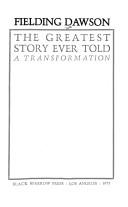
Guy Fielding Lewis Dawson was born in 1930 in New York City. He grew up in Kirkwood, Missouri, attended Black Mountain College from 1949-1953, served in the United States Army from 1953-1955, and lived in lower Manhattan, in the same loft in the Union Square-Gramercy neighbourhood for 38 years, the last 25 being spent with his wife, Susan Maldovan, a free-lance editor. He continued to lecture widely on the literary period of which he was an integral part, and to teach at universities, including the Jack Kerouac School of Disembodied Poetics in Boulder, Colorado, with a curriculum modelled on that of Black Mountain.
Excerpted from Michael Hrebeniak in Jacket magazine *(Jacket-16):*
The writer and visual artist Fielding Dawson, who died suddenly in January, was a central protagonist in the web of post-war American arts and letters that inevitably grows more threadbare by the week. Dawson situated himself inside two of the great civic areas of the avant-garde — Black Mountain College and New York — during a period of unparalleled confidence and fertility; a time when bohemianism still signified a dissenting community of men and women pursuing new values through creativity, as opposed to pierced nipples and commercial theatrics.
Eight years after Fielding Dawson was born in New York in 1930, his family moved to Kirkwood, near St. Louis, where his father worked as a journalist. His mother bought him a typewriter at 15, remarking, ‘we could use a new Saroyan.’ The memoirs of his life there, *Tiger Lilies: An American Childhood,* appeared in 1984. After taking portraiture classes with Tanasko Milovich, Dawson enrolled at Black Mountain College in North Carolina in 1949, alongside Robert Rauschenberg, Cy Twombly and Kenneth Noland, to study painting under Franz Kline and writing under Charles Olson.
The College had been founded in 1933 by John Andrew Rice as an experimental community of students and teachers, defying the crippling specialisation of an industrial education. It blossomed with the arrival of the Bauhaus artists Josef and Annie Albers after fleeing Nazi Germany, and took an even more radical turn under the Rectorship of the Olson in 1951.
Olson mentored a group of poets later bracketed under the name of the school that included Robert Creeley, Robert Duncan, Joel Oppenheimer, Ed Dorn and Fielding Dawson. Several of these returned to the College’s Lake Eden campus to teach, to be joined by such seminal figures as Willem de Kooning, Stefan Wolpe, John Cage, Merce Cunningham, M.C. Richards, Paul Goodman, Buckminster Fuller and Eric Bentley, before financial collapse enforced the College’s closure in 1956.
Black Sparrow Press, initially set up in 1966 to publish the work of Charles Bukowski, took on Fielding Dawson three years later with Krazy Kat / The Unveiling and Other Stories 1951–1968. This assumed its place within a corpus of twenty-two books written over nearly five decades; most of which are anthologies of shorter fictions, among further biographies, poems, essays and the *Penny Lane* trilogy of novels. Of his more recent books, *No Man’s Land* (2000) presents a fictionalised account of his prison teaching, and *Land of Milk and Honey* (2001) is a further collection of short stories.
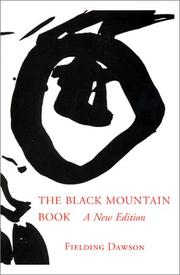
A review in the New York Times described his style as loose, but this overlooked the considerable degree of guile and craft in his fiction, as well as a direct engagement with Olson’s demand for a ‘projective’ writing, where form emerges from content alone. His essays demonstrated a similar speeding, jump-cut vigour, born of a poet’s ear and sense of measure, that in turn recalled the elastic phrasing of the bebopper & the heroic vitalism of the Action Painter, both of whom he strongly identified with. Of all the historiographers of Black Mountain, Dawson was the only one who studied there, and his eponymous 1970 book, expanded and reissued in 1990, conveys the intensity of a great era:
"The one thing we did not have in the 50s was the words to speak, to tell what we were doing. But we did all the rest, except — again — be able to answer Harold Rosenberg’s repeated question: does anybody have any ideas? in the crowded Cedar Tavern. Nobody could answer because we were doing, and not thinking, and Harold’s astute query predicted from that point that critics would speak for ... just who was doing what in their newest work... or even how to see, and sense the space and free release on a piece of paper, in tar splashed on a sidewalk, or torn posters on long cement, wood, or stone, or brick walls there in the city... the verve, the fresh vitality in space, in our composing atemporal images, finding a new, vivid, rewarding — great doors opened — freedom.