From New York Times obituary:
Robin W. Winks, a Yale scholar who combined a love of British imperial history with enthusiasm for open spaces and a consuming interest in international espionage and detective fiction, died on Monday, April 7, 2003, in New Haven, Connecticut. He was 72.
In more than 40 years of teaching at Yale, Dr. Wicks, who held the Randolph W. Townsend Jr. chair of history, wrote extensively about the history of the British Empire, with particular emphasis on Canada and Canadian relations with the United States, as well as on Australian and New Zealand history.
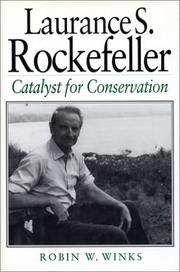
He also developed a boundless enthusiasm for America's national parks and monuments, and in 1998 became one of the few people to have visited all 376 of these sites.
His tireless advocacy for preserving open spaces led the National Parks Association in 1999 to award him its first Robin W. Winks gold medal for ''enhancing public understanding of the national parks.''
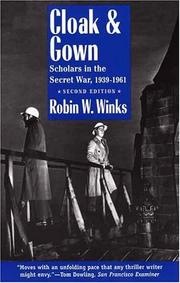
Another great interest of Dr. Winks's life was espionage and detective fiction, on which he wrote several books.
In 1999 he won the Edgar Award for his book ''Mystery and Suspense Writers.''
Robin William Winks was born in Indiana on Dec. 5, 1930, and graduated from the University of Colorado in 1952.
As a Fulbright Scholar in New Zealand, he received a master's degree in Maori studies from Victoria University before studying ethnography back at Colorado and earning his doctorate at Johns Hopkins in 1957.
He joined the history faculty at Yale in 1959 and remained there for the rest of his career, with the exception of some visiting posts overseas. From 1969 to 1971 he was cultural attaché at the United States Embassy in London. From 1999 to 2000 he was the Vyvyan Harmsworth visiting professor of American history at Oxford University, to which he returned in 1992 and 1993 as George Eastman professor, lecturing on the history of the British Empire.